
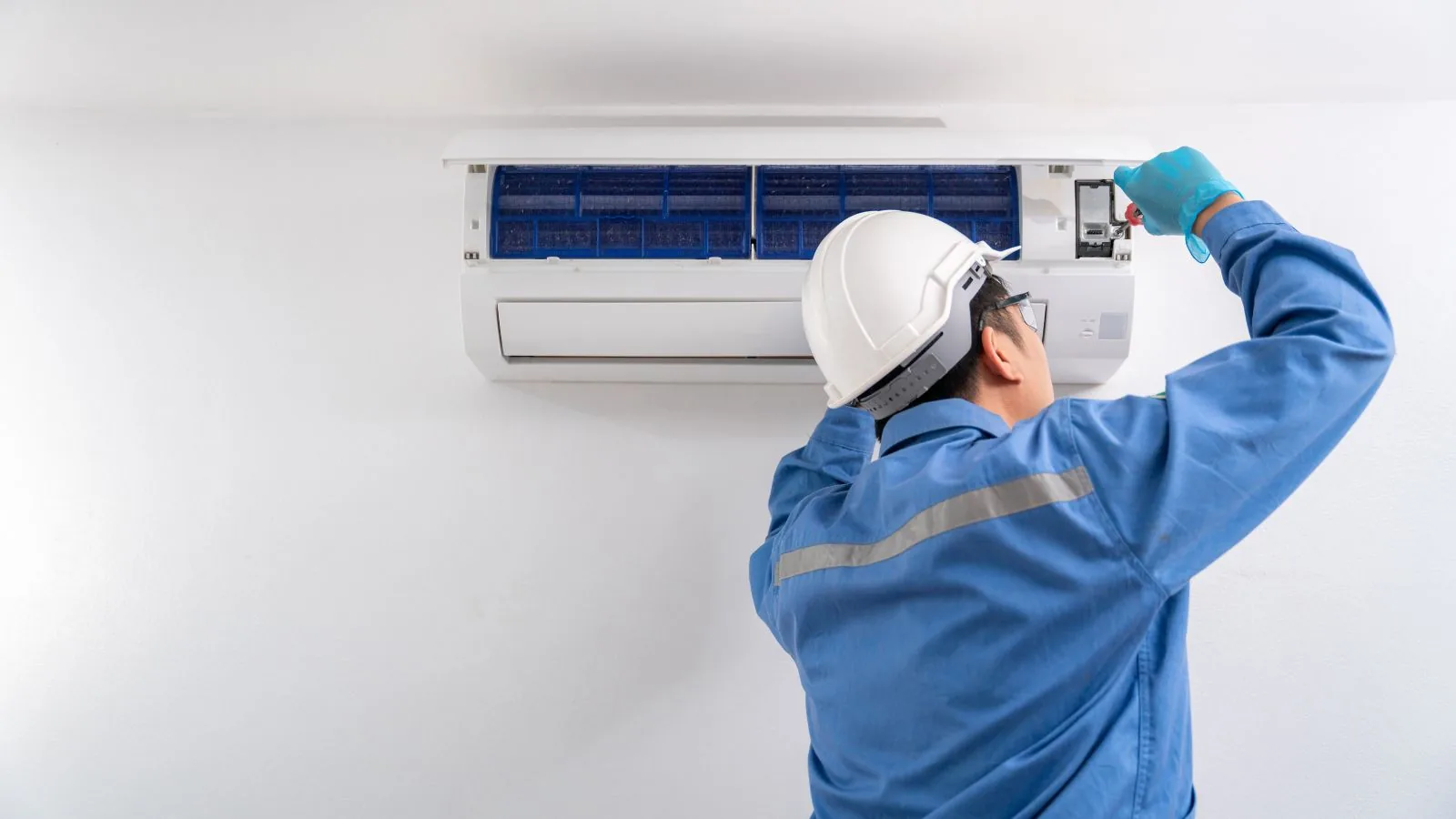
AC leak water damage repair in Southern Pines, NC deals with water from an air conditioner or heat pump that did not drain where it should. Every cooling system pulls moisture out of the air, and that condensate normally runs out through a drain line. When the line clogs or the pan overflows, the water goes into ceilings, closets, attics and walls.
In the Sandhills the cooling season is long, so units run for months and condensate builds up all the time. A drain line that clogs in June can leak for weeks before a ceiling stain shows it. Call if you see water at the air handler, a stain below an attic unit, or a musty smell near a return vent.
Where AC water damage comes from
- A clogged condensate drain line that backs up into the pan.
- A rusted or cracked drain pan under an attic or closet unit.
- A frozen evaporator coil that thaws and overflows the pan.
- A missing or failed float switch that should shut the system off.
- Poorly sloped drain lines that hold water.
Most of these leaks are slow. A stain that appears and fades with the thermostat cycle is a clue that the source is the AC and not the roof. A stain that grows after rain points the other way, and our page on ceiling water damage repair covers that case.
What to do right away
- Turn the system off at the thermostat so no more condensate is produced.
- Clear any standing water you can reach with a wet vacuum.
- Place towels or a bucket under drips and move items from the area.
- Photograph the pan, the stain and the drain line.
- Call an HVAC technician to clear the line, and call us for the water damage.
How the damage is dried and repaired
Water from an AC unit is usually clean when it leaves the pan, but it can pick up dust and biological growth from the pan, drain and insulation. Moisture meters and thermal imaging locate wet drywall, insulation and framing, and air movers and dehumidifiers dry the cavity.
Attic installations are common, and wet insulation in an attic holds water against the ceiling for a long time. Removing and replacing that insulation is often part of the job. A ceiling that has sagged or stained through is cut and replaced, then textured and painted.
Keeping the drain clear
A technician can flush the condensate line and check the pan and float switch during a regular service visit. A float switch is a small, inexpensive device that stops the system when the pan fills, and it is one of the best protections against this kind of loss. Mention it when you schedule service.
AC leak repair cost factors
The price follows the damage, not the AC:
- How long the unit leaked before it was caught.
- Whether the water reached insulation, drywall or flooring.
- Attic or closet access, which affects labor.
- Ceiling texture and paint matching.
- Drying days and equipment count.
Policies vary on AC leaks. Sudden overflow may be covered as accidental water damage, while a slow leak from poor maintenance is often excluded. The HVAC repair is usually a separate issue. Ask your insurer and keep service records.
Want your real number? ☎ Call (910) 387-8176
If the water reached a wall, our page on wall and drywall water damage repair covers that stage. In Carthage, the same process applies, and you can read about water damage restoration in Carthage.
Frequently asked questions
Can an AC leak really damage a ceiling?
Yes. Condensate from a clogged drain can saturate attic insulation and soak the drywall below it. It is usually slow, which is why it goes unnoticed.
Should I turn off the AC if it is leaking?
Yes. Turning the system off stops new condensate while you clear the water and call for service.
Do I call an HVAC company or a water damage company?
Both. The HVAC technician fixes the cause, and a restoration crew handles the wet materials and drying so the damage does not continue.
How do I know the stain is from the AC?
A stain that follows the thermostat cycle and sits below an attic unit or near a vent is a strong clue. Stains from roof leaks tend to follow rain.
Is the water from an AC unit safe?
It is usually clean at first, but it can pick up growth in the pan and drain. If it has sat in insulation, treat it carefully and let a crew assess it.