
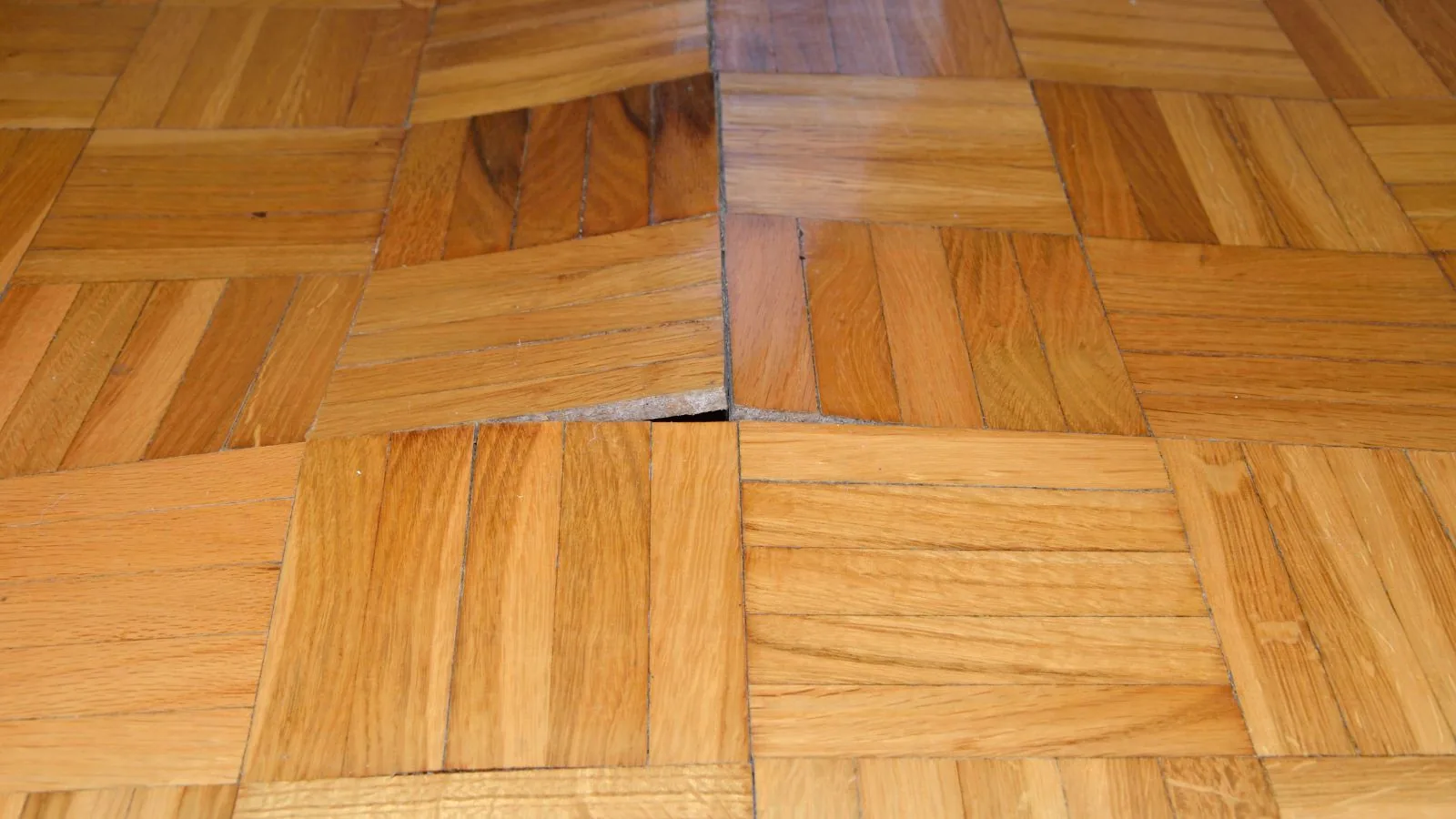
Hardwood floor water damage repair in Southern Pines, NC covers solid and engineered wood floors that got wet from a leak, flood or humidity. Wood absorbs water and swells, and the first signs are cupping at the board edges, gaps between boards or a floor that feels spongy. The sooner it is dried, the better the chance of saving it.
Remove standing water and lift rugs and furniture so the floor can breathe. Do not run a heater on wet wood, which can crack boards. Call so moisture readings can show whether the subfloor is also wet.
What water does to wood floors
- Cupping: board edges rise higher than the center after the underside absorbs moisture.
- Crowning: the center rises after a floor is sanded while still wet.
- Buckling: boards lift off the subfloor, which usually needs replacement.
- Staining: dark spots from water or from iron reacting with the wood.
- Gapping: boards shrink apart as they dry.
Cupping is the most common early sign, and it can often be reduced with controlled drying. Buckling is a sign of heavy water and usually means replacement. The difference between the two is mostly how much water and how long.
Drying wood floors the right way
Wood dries slowly and should not be rushed. Crews use moisture meters to read the floor and the subfloor, then place air movers, dehumidifiers and sometimes specialty floor drying systems. In some cases small holes are drilled or boards are lifted so air reaches the underside.
Drying too fast can crack boards. Drying too slowly can leave moisture trapped in the subfloor. That balance is why readings are taken each visit. Floors are only sanded and refinished after they have settled to normal moisture content, which can take weeks.
Repair, refinish or replace
| Condition | Typical path | Notes |
|---|---|---|
| Mild cupping, caught quickly | Dry, then sand and refinish if needed | May flatten as moisture equalizes |
| Gapping after drying | Monitor, then refinish or fill | Seasonal movement can be normal |
| Deep staining | Sand if surface only, replace if deep | Wood species and finish matter |
| Buckling or loose boards | Remove and replace affected areas | Subfloor must dry first |
| Contaminated water | Replace affected flooring | Category 3 water is not cleaned in place |
Engineered and laminate floors behave differently. Layers can swell and separate, and most often they are replaced. The page on carpet water damage restoration covers the other common floor type, and kitchen water damage discusses floors under cabinets.
Older Southern Pines floors
Southern Pines was incorporated in 1887 as a winter resort, and many older homes have original wood floors, sometimes over crawl spaces. Old finishes, wide boards and thin subfloors react differently from new engineered planks. A moisture reading under the floor, not just on the surface, shows whether the crawl space below is part of the problem, which is covered on our page about crawl space water damage.
Hardwood repair cost factors
Wood floor costs depend on how far the damage reached:
- Square footage of affected flooring.
- Wood type, board width and whether it is solid or engineered.
- Whether the subfloor needs drying or replacement.
- Sanding, staining and finish coats.
- Drying time and equipment.
A sudden leak that wets a floor is often covered, while gradual damage from a slow leak often is not. Ask your insurer how it treats flooring, and ask whether matching is covered when only part of a floor is replaced. Photograph the floor before work starts.
Want your real number? ☎ Call (910) 387-8176
We serve Sanford as well, and the same approach applies there, as described on our Sanford page.
Do not sand or refinish a hardwood floor until moisture readings in the boards and subfloor match a dry reference. Finishing a floor that is still wet is a common reason for coatings to fail.
Homeowners with older plaster and solid wood floors may also want our guide for Weymouth Heights.
Frequently asked questions
Can a water-damaged hardwood floor be saved?
Often, if it is dried quickly and the damage is limited to cupping or mild gapping. Buckled boards and contaminated water usually mean replacement.
Why is my wood floor cupping?
Moisture on the underside swells the bottom of boards faster than the top, so the edges rise. It can come from a leak, humidity or a wet crawl space.
How long before I can refinish a dried floor?
Only after moisture content has returned to normal for your home. It can take weeks, and sanding too early can lead to crowning.
Is laminate flooring salvageable after water?
Rarely. The core swells and the seams separate. Most damaged laminate is replaced.
Should I use a fan on a wet wood floor?
Gentle air movement helps, but heaters and rushed drying can crack boards. Let moisture readings guide the equipment.