
Structural drying and dehumidification in Southern Pines, NC is the controlled removal of moisture from walls, framing, subfloor and contents after a water loss, using air movers, dehumidifiers and moisture monitoring. Water mitigation is the broader term for stopping and containing a loss, and drying is its longest and most technical part. The goal is to bring wet materials back to a dry standard before mold or rot sets in.
Why are my walls damp and my house smells musty days after a leak?
Because the water you removed was only the water you could see. Moisture stays in drywall, framing, insulation and subfloor, and it slowly evaporates into the air of the house. That is the damp feeling and the musty smell. The trade name for the fix is structural drying, and it is the reason crews leave fans and dehumidifiers running for several days.
How drying actually works
Wet materials release moisture into the surrounding air, and that air has to be removed or it simply re-wets the structure. Air movers push dry air across wet surfaces to speed evaporation. LGR dehumidifiers, which are low grain refrigerant units, remove that moisture from the air and send it out as water. Doors and windows are managed so the system stays balanced.
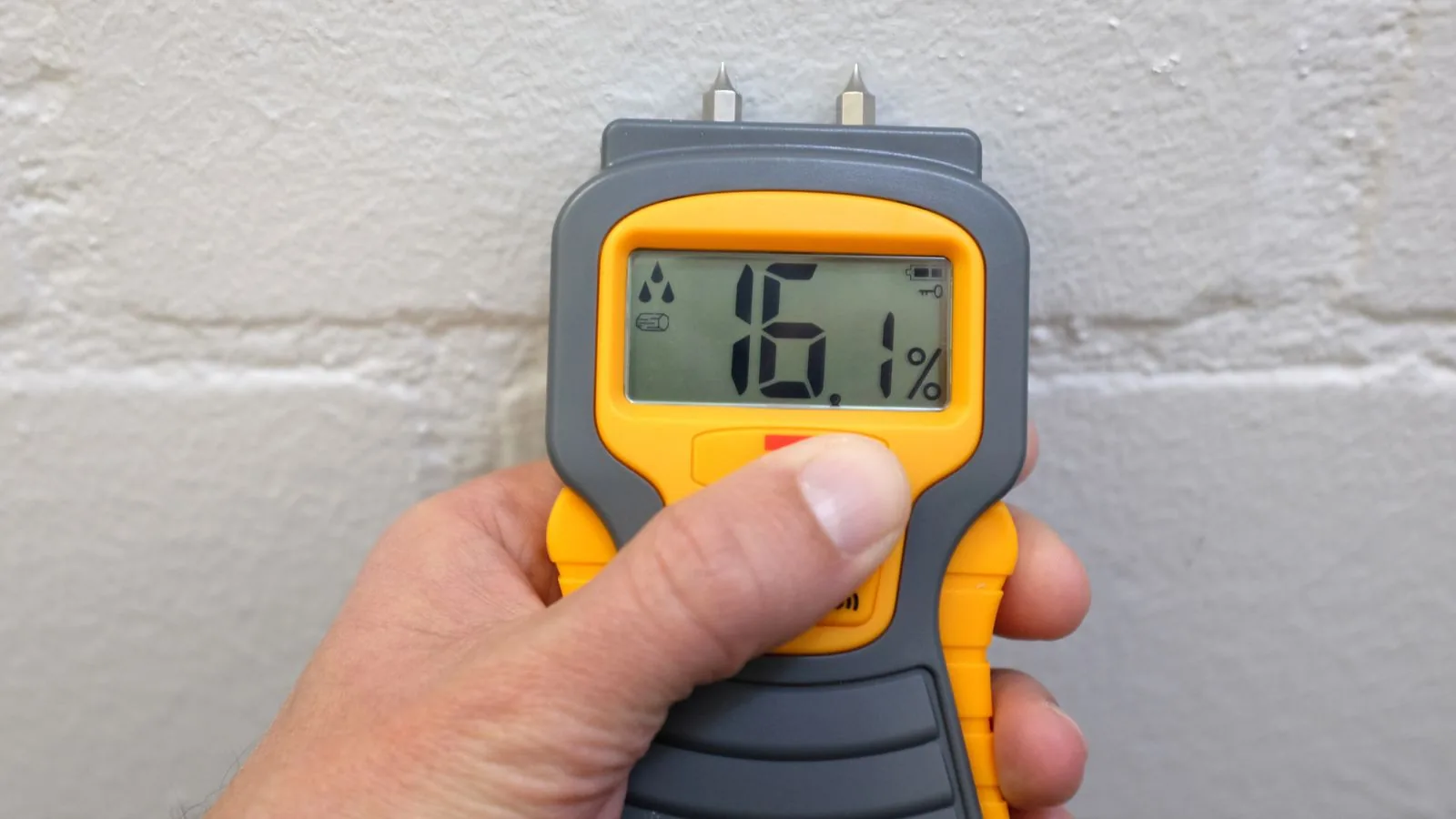
Water mitigation is the name for the whole first stage, including stopping the source and extracting standing water. Drying follows, and it is monitored. Meters show moisture content in drywall and wood, and thermal imaging shows cool wet areas behind finished surfaces. Readings are taken on the first visit and again each day.
Water loss classes and what they mean for drying
| Class | What it describes | What it usually means for drying |
|---|---|---|
| Class 1 | Small area, low-absorbing materials | Shortest drying, limited equipment |
| Class 2 | Whole room, carpet and wall wicking | Moderate equipment and time |
| Class 3 | Water from above, saturated walls, insulation and subfloor | Heavier equipment, longer drying |
| Class 4 | Deep saturation in dense materials like hardwood and concrete | Specialty drying, longest time |
These classes come from the ANSI/IICRC S500 standard for professional water damage restoration. Ask any company whether its crews work to it. The class tells the crew how many machines to place and how long to expect, not how much the job will cost.
What a dry standard means
A house is not dry when it feels dry. A dry standard is set by taking readings from unaffected materials in the same house, and drying continues until wet materials match them. When readings meet the standard, equipment is removed. This is what keeps the project from ending too early, and it is what gives an insurer documentation.
- Moisture readings are logged each visit with date and location.
- Equipment is repositioned as wet areas shrink.
- Drying ends when readings match the dry standard, not when the surface feels dry.
Drying hardwood, concrete and framing
Dense materials dry slowly. Hardwood and subfloor may need specialty drying systems, and concrete can hold moisture for a long time. Framing can look dry while still holding enough moisture to support mold. Our page on hardwood floor water damage repair covers what happens to wood floors, and wall and drywall water damage repair covers walls.
Drying cost factors
Drying cost reflects equipment and time:
- Number and type of machines placed.
- Class of water loss and materials involved.
- Number of rooms and the volume of air to be conditioned.
- Days of drying until the dry standard is met.
- Whether demolition is needed to reach wet cavities.
Insurers often want drying logs and moisture readings as part of a claim. Ask your insurer what documentation they require, and ask us to keep a record of each visit. General rule: sudden and accidental water is more often covered than gradual leaks.
Want your real number? ☎ Call (910) 387-8176
After a flood, drying matters even more. See flood damage cleanup for what contaminated water adds to the job. In Aberdeen and nearby towns, our Aberdeen page has local details.
If you live on the west side of town, see West Southern Pines for how drying fits a typical home loss there.
Frequently asked questions
Why is my house still damp after the water was cleaned up?
Moisture remains inside walls, framing and flooring. Structural drying with air movers and dehumidifiers removes it. A surface that feels dry can still hold moisture.
How long does structural drying take?
It depends on the materials, the amount of water and the equipment. Many losses take a few days, and dense materials like hardwood and concrete can take longer.
What is an LGR dehumidifier?
A low grain refrigerant dehumidifier removes more moisture from the air at lower humidity levels than a standard unit, which makes it a core tool in drying.
What is moisture mapping?
It is the process of taking moisture readings across walls, floors and ceilings with meters and thermal imaging to find where water has traveled.
Can I use fans and a household dehumidifier myself?
For a minor spill, yes. For wall cavities, subfloor and larger losses, a household unit rarely removes enough moisture and gives no record of when the structure is dry.