
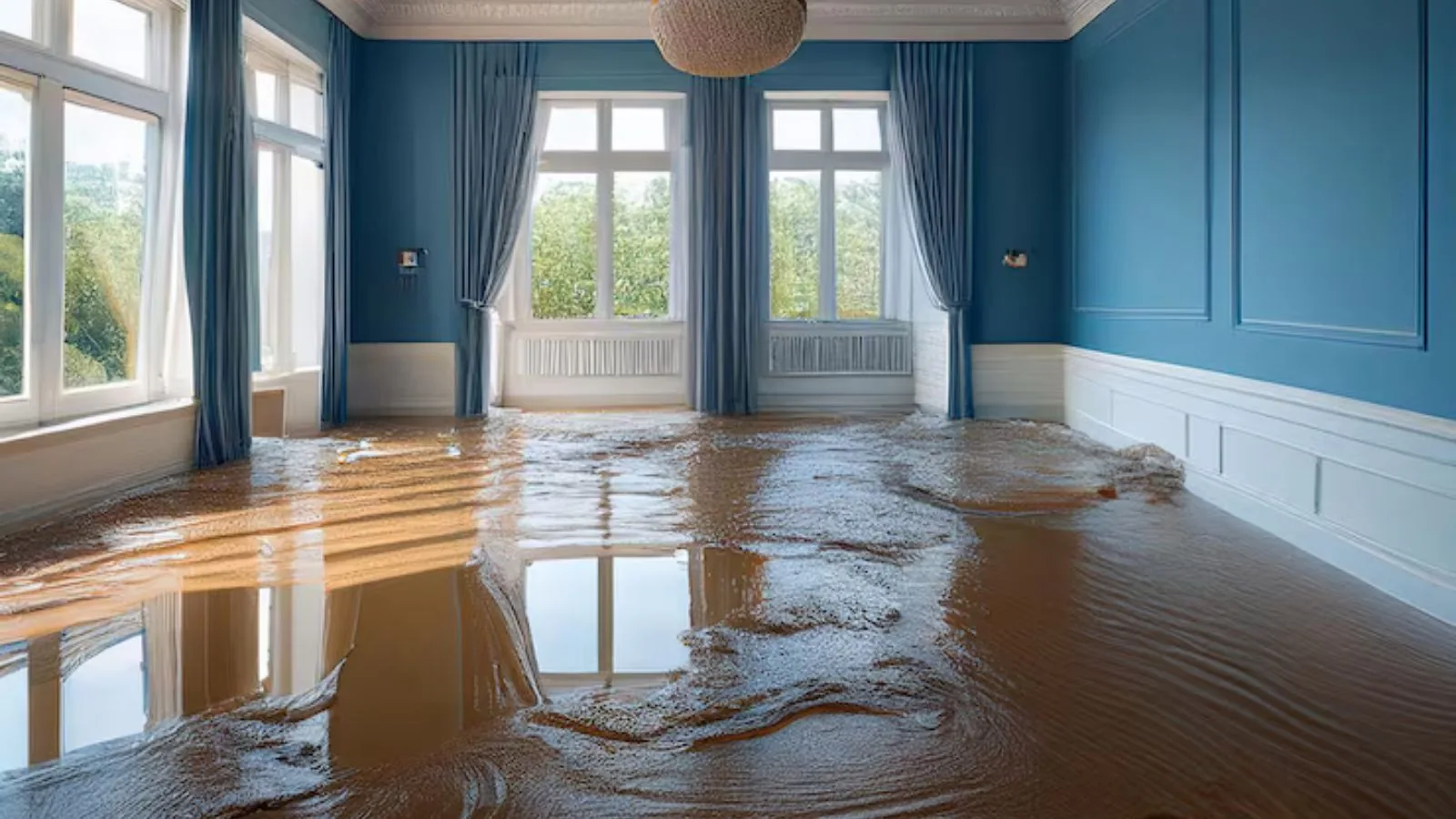
Wall and drywall water damage repair in Southern Pines, NC covers stained, swollen or soft walls, wet baseboards and insulation inside the wall cavity. Drywall is paper-faced gypsum that absorbs and holds water, and water can wick upward from the floor several inches above the visible line. A wall that looks fine on the surface can still be wet inside.
Signs include bubbling paint, a stain that grows, soft drywall near the floor, peeling wallpaper, swollen baseboards and a musty smell. If the wall is actively wet, find the source first, whether a supply line, an appliance, a window or the roof.
What water does inside a wall
Water enters through a leak or from the floor and moves along the paper face and into the insulation. Insulation holds water against the studs, and wet studs can stay damp for a long time. Paint seals the surface, so water can stay hidden behind it.
- Baseboards swell and separate from the wall.
- Drywall paper bubbles, stains and peels.
- Gypsum softens and crumbles when saturated.
- Insulation holds water and sags.
- Studs and bottom plates stay damp if not dried.
Finding the true wet area
Moisture meters and thermal imaging map wet areas without opening the whole wall. A stain on the surface may be smaller than the wet area behind it, or sometimes larger. Readings from a dry section of the same wall give the target for drying.
Wall damage often follows another loss, such as a pipe failure covered on our page for burst pipe water damage, or the first stage of water extraction. The wall is where the hidden water is, and drying it correctly keeps the repair from being redone.
Dry in place, flood cut or replace
| Wall condition | Typical approach | Reason |
|---|---|---|
| Damp but firm, clean water | Dry in place with air movers | Avoids demolition when the material is intact |
| Soft, swollen or crumbling | Cut out and replace | Gypsum loses strength when saturated |
| Wet insulation behind firm drywall | Open a section, remove insulation, dry cavity | Insulation holds water against framing |
| Contaminated water | Remove affected drywall above the waterline | Contamination cannot be cleaned in place |
| Plaster in older homes | Case by case, often dried and repaired | Plaster and lath react differently from drywall |
A flood cut is a horizontal cut made above the waterline so wet drywall and insulation can be removed and the framing dried. After the cavity is dry, new drywall is hung, taped, finished and painted. Paint before the wall is dry is the most common reason stains come back.
Baseboards, trim and paint
Baseboards that have swollen are usually replaced. Painted trim that has only been splashed can often be dried and saved. Paint matching takes care. The new section needs primer, texture matching and a full wall paint if the color is not an exact match. If the water traveled from above, see ceiling water damage repair for how stains and sagging are handled.
Drywall repair cost factors
Wall repair prices depend on the extent of the wet area:
- How much drywall and insulation must be cut out.
- Wall height, texture and paint matching.
- Whether baseboards, trim or cabinets must be removed.
- Whether framing needs drying or treatment.
- Drying time before closing the wall.
Sudden leaks that wet a wall are often covered, while slow leaks and long-term moisture often are not. Ask your insurer what it will pay for drywall, paint and trim, and whether full-wall painting is included. Photograph the wall before demolition.
Want your real number? ☎ Call (910) 387-8176
In Carthage and nearby towns, the same steps apply, and you can read about water damage restoration in Carthage.
Frequently asked questions
Can wet drywall be dried and saved?
Sometimes. If the board is firm, the water was clean and drying starts quickly, it can be dried in place. Soft or contaminated drywall is replaced.
Why does a water stain on the wall keep coming back?
Either the wall was not fully dry before painting or the leak is still active. Primer can hide a stain but cannot stop moisture.
What is a flood cut?
A horizontal cut in drywall made above the waterline so wet drywall and insulation can be removed and the framing dried.
Do I need to replace insulation in a wet wall?
Usually, yes. Wet insulation holds water against the studs and loses its value.
How long before I can paint?
After the wall reaches the dry standard on moisture readings, and after any patching has dried. Painting earlier risks trapping moisture.