
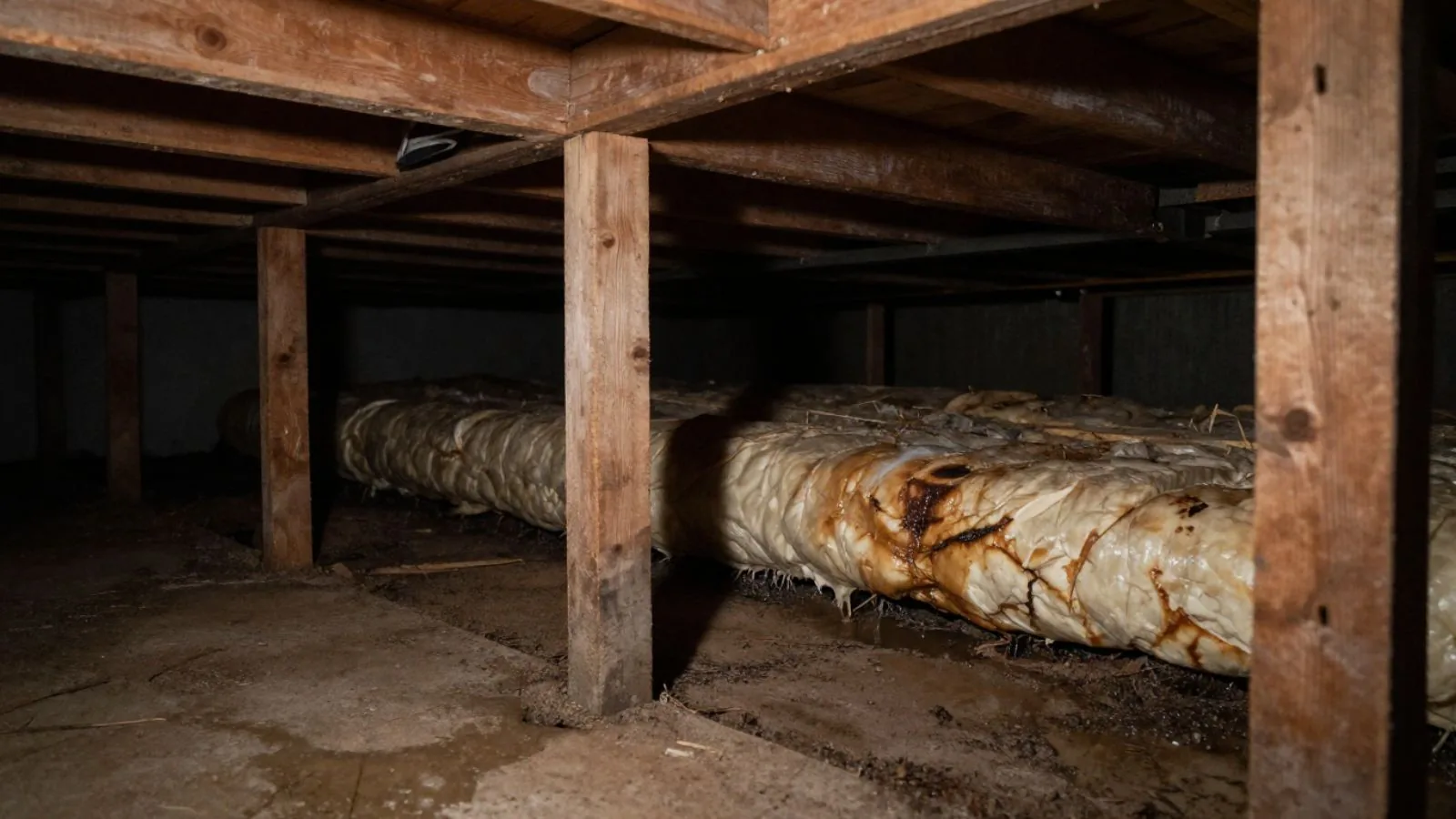
Crawl space water damage cleanup in Southern Pines, NC covers water that collects in the low void under a raised house, from plumbing leaks, drainage problems or heavy rain. A crawl space holds floor joists, subfloor, insulation, ducts and supply lines, and all of them are affected when water gets in. A wet crawl space can also push moisture up into the living space.
Because it is out of sight, a crawl space leak often goes unnoticed. Cold floors, a musty smell in the house, sagging insulation and warped hardwood are signs that something below is wrong. Water from a pipe leak is a different problem from water that drains in from outside.
What water does under a house
Wet joists and subfloor hold moisture for a long time because air does not move freely. Fiberglass insulation soaks up water, loses its value and sags away from the floor. Ductwork can collect water, and wet soil can add humidity that rises into the home.
- Insulation that is wet, sagging or on the ground.
- Standing water or damp soil, especially after heavy rain.
- Dark stains or a musty smell on joists and subfloor.
- Pooling around plumbing and drain lines.
- Hardwood above that cups or buckles.
Where the water comes from
Supply or drain lines in a crawl space can leak for months before anyone sees them. A failed water heater, a cracked drain or a plumbing joint can all release water that has nowhere to go. In heavy storms, overwhelmed drainage can push water toward foundations.
Check the FEMA Flood Map Service Center for your property and ask the Town of Southern Pines about local drainage. If the water is coming from a source above, such as a burst line, see our page on burst pipe water damage.
How cleanup works
- Locate and stop the source, which may be a plumbing leak or surface drainage.
- Extract standing water with a pump or extraction unit.
- Remove wet or contaminated insulation that cannot be saved.
- Measure moisture in joists and subfloor with a meter.
- Set air movers and a dehumidifier, and log moisture readings until dry.
- Check the underside of flooring above for cupping or movement.
Access is tight, so crews often work in coveralls and respirators. If the water came from a sewer line, treat it as contaminated and see our page on sewage backup cleanup. Large areas of mold are a separate remediation job that follows the ANSI/IICRC S520 standard, and homeowners should ask whether North Carolina licenses mold work.
Crawl space cleanup cost factors
Crawl space jobs are priced by access and by what is under the floor:
- Height and access to the crawl space.
- Standing water depth and the area covered.
- Insulation and vapor barrier that must be removed.
- Moisture in joists and subfloor.
- Drying time in a space with little airflow.
Coverage depends on the source. A sudden pipe failure may be covered, while groundwater and flood water are typically excluded, and flood coverage is a separate policy. Ask your insurer and photograph the space before cleanup.
Want your real number? ☎ Call (910) 387-8176
If the water has reached the floor above, see hardwood floor water damage repair. We also work in Pinehurst, so water damage restoration in Pinehurst has the details.
Safety under the house
- Turn off power to the crawl space circuit before entering.
- Wear a respirator, gloves and knee pads.
- Never enter alone, and tell someone when you go under.
- Watch for wildlife, wasps and sharp objects.
- Leave any area with standing water to a professional.
If your home has a vapor barrier, note whether it is torn, displaced or covered in water, because that detail helps us plan the drying.
Frequently asked questions
How do I know my crawl space has water damage?
Cold or sagging floors, a musty smell, damp or fallen insulation and warped flooring are common signs. Looking inside with a flashlight confirms it.
Is crawl space water dangerous to enter?
It can be. Tight space, possible contamination and electrical wiring all matter. Let a crew with protective gear handle standing water.
Do I need to replace the insulation?
Often, yes. Wet fiberglass insulation loses its value and holds water against the floor. A moisture reading decides what stays.
Can a wet crawl space cause mold?
Moisture is what mold needs, so a wet crawl space raises the risk. Drying quickly limits it. If mold is already widespread, it is a separate remediation job.
Who fixes the drainage outside?
A drainage or grading contractor handles that. We handle the water inside the crawl space and the drying.