
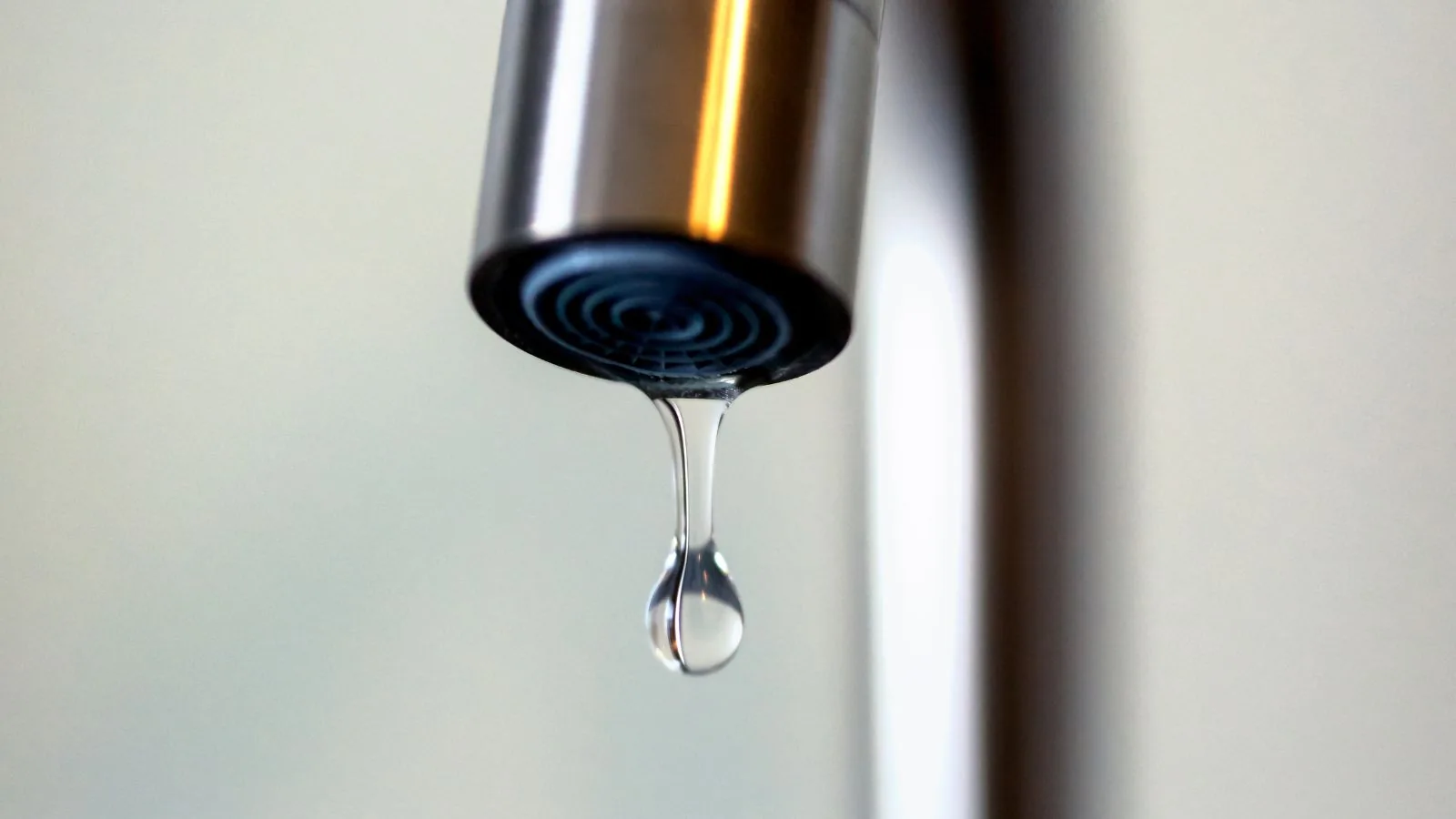
Kitchen water damage restoration in Southern Pines, NC covers water damage to cabinets, countertops, flooring and walls around the sink, dishwasher and refrigerator. A kitchen has supply lines, drains and appliances packed into a small space, so a leak often soaks cabinet bases and subfloor before anyone sees it. Call when you notice swelling, stains or a musty smell under the sink.
Where kitchen water damage starts
- Under-sink supply lines, shutoff valves and drain traps.
- Garbage disposal and dishwasher connections.
- Refrigerator ice maker and water dispenser lines.
- Faucet seals that drip into the cabinet.
- Plumbing in an adjoining wall.
Under-sink leaks are the most common. A small drip can run for months into the cabinet floor, which is often particleboard. Water under a dishwasher spreads beneath the cabinets and into the subfloor. If an appliance itself failed, our page on appliance leak water damage covers that part.
What water does to cabinets
Cabinet material decides what can be saved. Particleboard and medium density fiberboard swell when wet and rarely return to shape. Plywood boxes and solid wood tolerate water better and can often be dried. Laminate or veneer surfaces peel when moisture gets behind them.
| Material | Reaction to water | Usual result |
|---|---|---|
| Particleboard or MDF cabinet base | Swells and crumbles | Replaced |
| Plywood cabinet box | Tolerates short exposure | Often dried and kept |
| Solid wood doors | Can warp or stain | Dried, sometimes refinished |
| Laminate countertop | Edges and seams lift | Replaced if swollen |
| Stone or solid-surface counters | Not harmed by water | Cleaned, check supports |
How drying and repair work
Crews remove the toe-kick, open cabinet bases and measure moisture in the subfloor and wall behind. Small holes can let air movers dry the cavity without demolition. Soaked insulation and drywall behind cabinets are removed. If flooring continues under the cabinets, it has to dry too, and that may mean lifting a few boards or tiles.
When cabinets must be removed, the order of work matters. Countertops are detached, bases are removed, and the subfloor is dried before anything new goes in. Replacing cabinets before the subfloor is dry traps moisture behind them. See structural drying for how readings are used to confirm the floor is ready.
Flooring under the kitchen
Hardwood, laminate and tile react differently. Wood cups and laminate swells at the seams. For the wood case, see hardwood floor water damage repair. Tile and sealed floors usually survive, but the subfloor beneath them may not.
Kitchen restoration cost factors
Kitchen jobs are priced by materials and access:
- Cabinet material and how many bases were wet.
- Whether countertops must be detached and reset.
- Flooring and subfloor affected.
- Appliance moving and reconnecting.
- Drying time with cabinets in place.
A sudden leak from a supply line or appliance is often covered, while a slow drip from neglect often is not. Ask your insurer how your policy treats cabinets and countertops. Photograph the damage and keep the damaged pieces until the insurer has seen them.
Want your real number? ☎ Call (910) 387-8176
If you live in Pinehurst, our page on water damage restoration in Pinehurst describes how we serve that area.
Cabinets and counters
Cabinet bases made of particleboard swell when they get wet and often cannot be saved, while solid wood boxes can usually be dried. Remove the toe kick to let air reach the space behind, and check the wall behind the dishwasher and under the sink for moisture that may have wicked upward.
Cooking safely after a leak
- Do not use a stove or oven that has been soaked until it has been checked.
- Discard food that touched contaminated water.
- Check that outlets near the sink are dry before use.
- Run dishes and sinks only after the plumbing is confirmed leak-free.
Frequently asked questions
Can swollen kitchen cabinets be saved?
Plywood and solid wood often can, after drying. Particleboard and MDF that has swollen usually must be replaced.
How do I know there is water under my sink?
A damp or stained cabinet floor, a musty smell, soft or swollen wood and visible drips at connections are common signs.
Should I remove the dishwasher myself?
Only after shutting off the water and power. Moving it can strain connections. A crew can do it safely and check the floor beneath.
Do I need to replace the countertop?
Not always. Stone and solid surface are usually fine. Laminate and particleboard-backed tops often are not. Moisture readings help decide.
How long does kitchen drying take?
Typically a few days, depending on the materials. Cabinet bases and subfloor are slower to dry than open walls.