
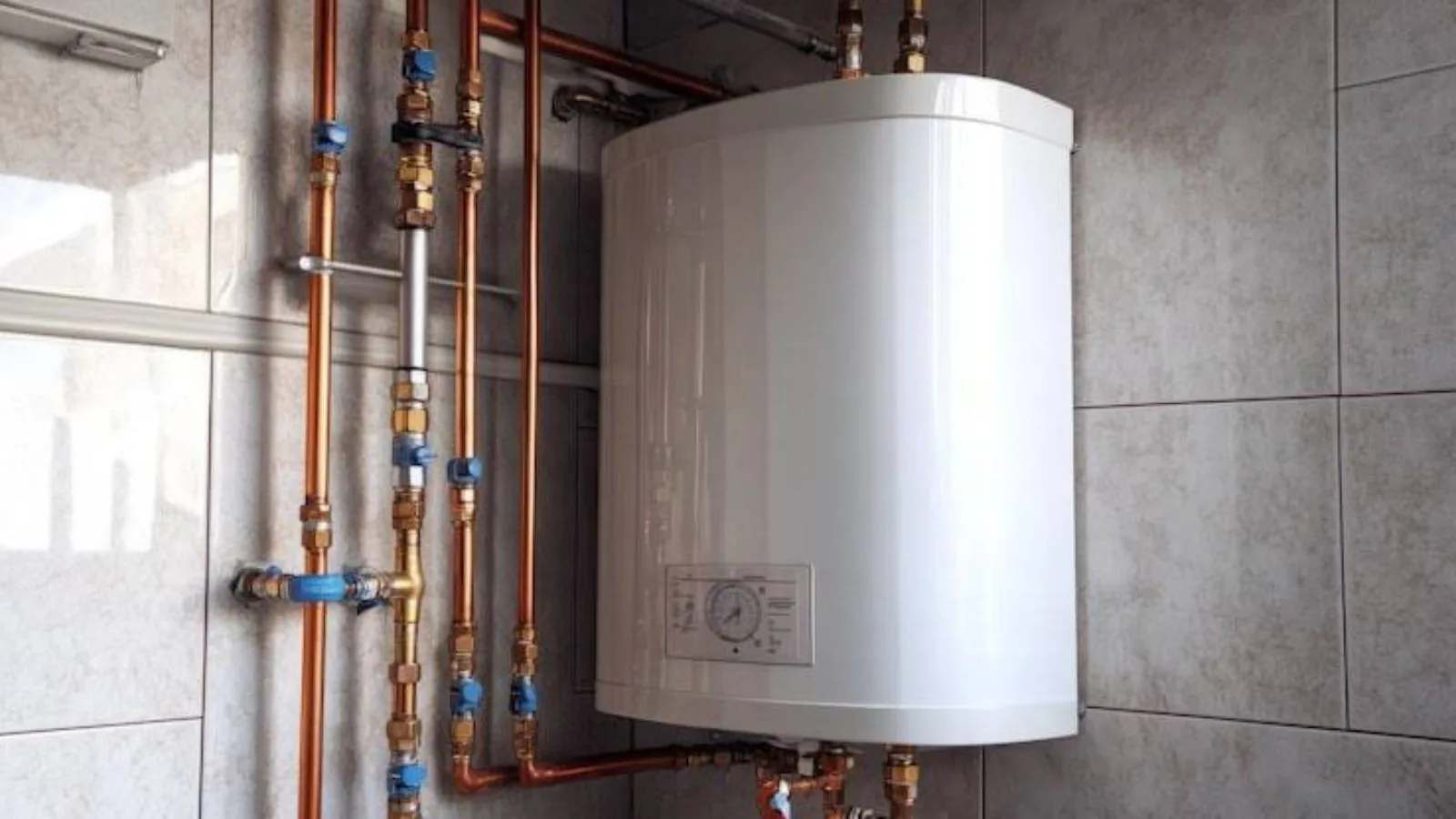
Emergency water heater leak cleanup in Southern Pines, NC starts when a tank splits, a fitting fails or a relief valve discharges, and gallons of water spread across a closet, garage or utility room. A typical residential tank holds dozens of gallons, and a failure can release most of it quickly. Our emergency line is open 24/7.
Turn off power to the water heater at the breaker, or turn the gas control to off if you have a gas unit. Close the cold water supply valve on top of the heater. Do not stand in standing water to do this, and leave the house if you smell gas.
When a water heater leak is an emergency
Power, gas and hot water
A failing electric heater sitting in water is a shock hazard, and gas units add a fire and carbon monoxide concern. Water from the tank can also be hot enough to scald. If you cannot safely reach the breaker or the valve, call the utility or 911 first.
A steady drip from a connection is less urgent than a split tank, but both can saturate subfloor and baseboards within hours. If the unit sits on a slab, water spreads outward. If it sits over a wood floor or in an attic, water goes down into the structure.
Why water heaters leak
- Tank corrosion from the inside as the anode rod wears out.
- Loose or worn supply and relief valve connections.
- Sediment buildup that overheats the tank bottom.
- Pressure problems that force the relief valve to discharge.
Southern Pines drinking water is surface water from Drowning Creek, and the Town's 2024 water quality report lists average hardness at 7.7 mg/L, which is soft by the common scale. Soft water leaves little mineral scale, so tanks may show fewer white crusts at a leaking fitting. That means a slow leak is easier to miss, and a damp floor under the heater is worth checking monthly.
What the cleanup involves
Crews extract standing water, pull wet baseboards and any soaked drywall near the floor, and check the subfloor with a moisture meter. If the heater sits in a closet, the adjacent walls and flooring get checked for wicking. Air movers and a dehumidifier dry the area, and readings are logged until the structure is dry.
The water heater itself is a plumbing job. A plumber replaces or repairs the unit, and restoration handles the water. Scheduling the plumber early helps, because a failed heater leaves the house without hot water while the drying is going on.
Where else the water goes
A heater in a garage or utility room may push water under a shared wall into carpet or hardwood. Our pages on carpet water damage and hardwood floor water damage repair explain what happens to those floors. If the heater is in a crawl space, crawl space water damage applies.
Water heater leak cleanup cost factors
The cleanup price depends on where the tank sits and how far the water went:
- Tank location, such as closet, garage, attic or crawl space.
- Volume released and how long it ran before shutoff.
- Flooring and drywall that absorbed the water.
- Access to the area and how much contents must be moved.
- Drying days and whether the plumber's work delays drying.
A sudden tank failure is often covered as accidental water damage, while a slow leak from age or neglect often is not. The repair or replacement of the heater is usually treated separately from the water damage. Ask your insurer which parts of the loss your policy covers.
Want your real number? ☎ Call (910) 387-8176
We cover the whole area, including Pinehurst. If your home is there, see water damage restoration in Pinehurst.
Frequently asked questions
Do you handle water heater leak emergencies at night or on weekends in Southern Pines?
Yes. We take emergency calls at any hour. Turn off the heater's power or gas and close the cold water valve if you can do so safely, then call.
How much water can a failed water heater release?
A residential tank holds dozens of gallons, and a split can release most of it in a short time, along with continued flow from the supply line if the valve is not closed.
Is it safe to touch the heater after a leak?
Not without caution. Electric units in water can shock, hot water can scald, and gas units add risk. If you are not sure, call the utility or 911 before touching anything.
Do you replace the water heater?
No. A plumber does that. We extract the water, remove wet materials and dry the structure, and we can work around the plumber's schedule.
Will a small drip cause real damage?
Yes, over time. A slow leak soaks subfloor and baseboards, and it often goes unnoticed. A damp floor under the heater is a reason to check the connections.