
By the Southern Pines Water Damage Pros team
Water damage is one of the most expensive surprises in a home purchase, and it often hides behind fresh paint. A careful walkthrough, the right questions and a good inspector can show whether a house has had a water problem, and whether it is fixed or still active. This guide covers what to look for.
Start outside
- Grading: does the ground slope away from the foundation or toward it?
- Gutters and downspouts: are they intact and discharging away from the house?
- Roof: look for patches, missing shingles and rusted flashing.
- Foundation: check for cracks, stains and efflorescence, the white powder left by moving water.
- Crawl space vents and access doors: are they intact and clear?
Ask where the lot sits relative to the street and neighboring lots. Water runs downhill. If your target house sits lower, runoff can concentrate there. Check the FEMA Flood Map Service Center for the address before you make an offer.
Inside: look, smell, touch
- Ceilings and corners: look for stains, even faint ones, and for fresh paint in odd places.
- Walls near plumbing: check bathrooms, kitchens and laundry rooms for bubbling paint and soft spots.
- Floors: look for cupped boards, loose tile and carpet that feels different underfoot.
- Cabinets: open sink bases and look for stains, swelling and rust on pipes.
- Smell: a musty odor in closed rooms is a sign of moisture.
- Windows: check sills for staining and soft wood.
Fresh paint on a single patch of ceiling or wall is a common sign of a repaired stain. It is not proof of a problem, but it is a reason to ask.
Questions to ask the seller
- Has the house ever had a leak, flood or storm damage, and where?
- Were claims filed, and what was repaired?
- Who did the repairs, and are there invoices?
- Were permits pulled for any rebuild work?
- How old are the roof, water heater, supply lines and HVAC?
The Town of Southern Pines Building Permits and Inspections division lists residential permits for new construction, additions, alterations, demolition and relocation. Ask the office what records it keeps for a property, and ask the seller for any permit paperwork.
Inspection tools worth asking for
| Tool | What it shows | Good to know |
|---|---|---|
| Moisture meter | Moisture in drywall, wood and subfloor | Surface readings only without opening walls |
| Thermal camera | Temperature differences that can suggest wet areas | Needs interpretation, not proof alone |
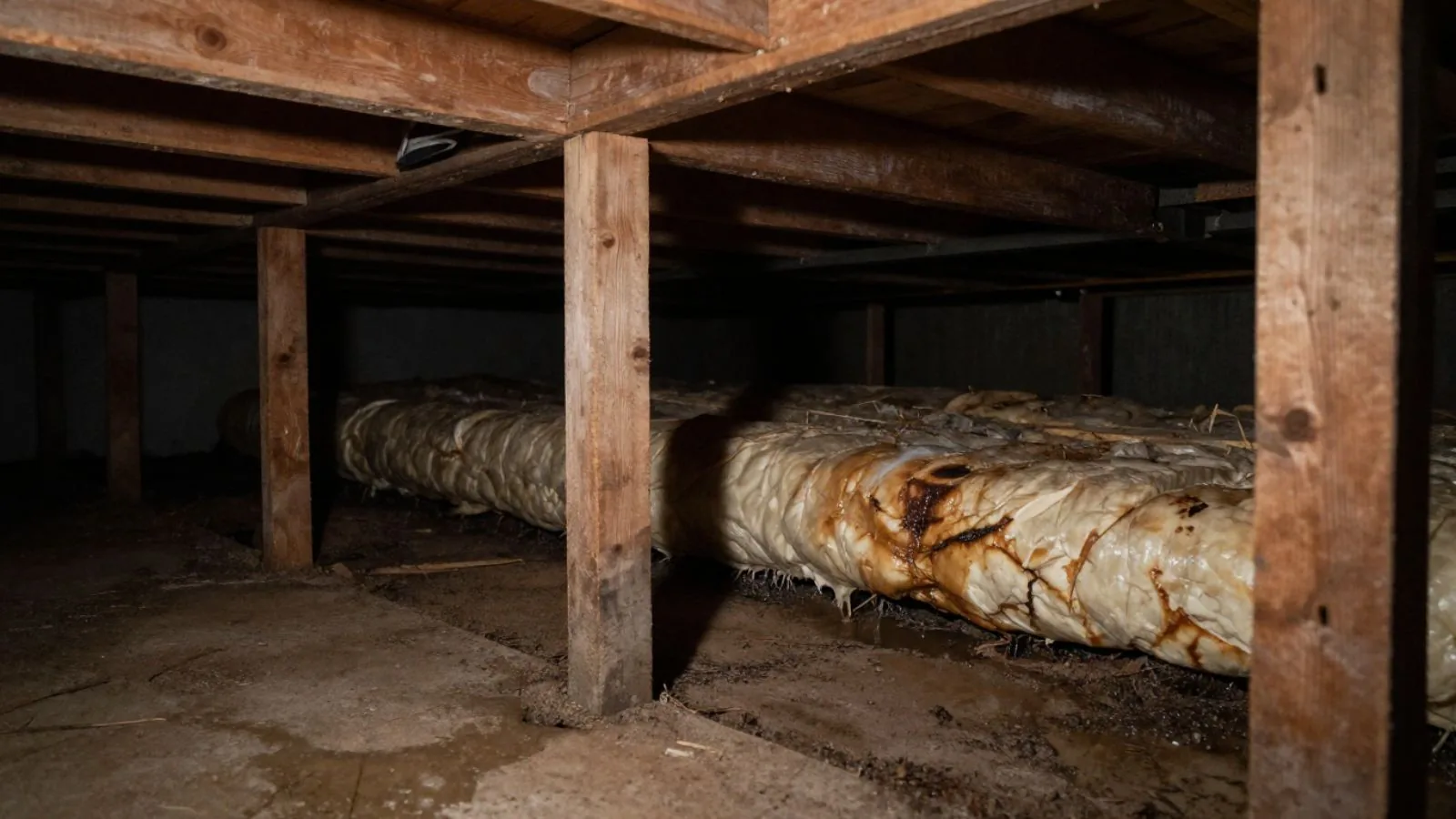
| Crawl space entry | Insulation, vapor barrier, standing water | Often skipped, worth requesting |
| Water meter test | Whether water is moving with all fixtures off | Can hint at a hidden leak |
| Attic inspection | Roof deck stains and wet insulation | Shows leaks hidden from below |
If an inspector finds moisture, ask what is wet, how much and why. A reading on a wall that was recently repaired may be a dried repair or an active leak. For more on how professionals map moisture, see structural drying.
What to do with the findings
Active moisture is a negotiation point. Get the source identified, a repair estimate and a drying plan before closing, or walk away. If the damage is old and dry, ask for documentation of the repair and check whether the insurer will cover the house at normal rates. Some insurers ask about water claim history.
Reading an inspection report with water in mind
Home inspection reports are long, and moisture findings can hide in the middle of them. Read for words like staining, elevated moisture, efflorescence, previous repair, grading and drainage. Each one is a prompt to ask a follow-up question, not necessarily a reason to walk away.
If the report suggests a concern in a crawl space, attic or slab, consider paying a specialist to look at that one area instead of relying on a general summary. A short extra visit before closing is a small cost compared to discovering the same issue in the first rainy season after you move in.
A short list for the final walkthrough
- Run every faucet and flush every toilet, then check below them for drips.
- Turn on the shower and look at the ceiling underneath.
- Open the water heater closet and look at the floor.
- Check that the air conditioner drain line is clear and the pan is dry.
- Look in the attic hatch for stains on the underside of the roof.
Southern Pines buyer notes
Southern Pines was incorporated in 1887 as a winter resort, and its Historic District is a National Register site, so some homes are well over a century old. Older construction means older plumbing, plaster and wood floors, and these age differently from modern materials. Ask for the age of supply lines and check crawl spaces in older homes.
Source types: Town of Southern Pines permit information and the FEMA Flood Map Service Center. Buyers in nearby towns can see our pages for Pinehurst and Aberdeen.
Frequently asked questions
How can I tell if a Southern Pines home has had water damage?
Look for stains, fresh paint patches, a musty smell, soft floors and corroded pipes. A moisture meter and an inspection confirm what you see.
Should I ask for a crawl space inspection?
Yes, if the house has one. Crawl spaces hold insulation, plumbing and joists, and water problems there are often hidden.
Does fresh paint mean there was a leak?
Not always, but a patch of fresh paint on a ceiling or wall is worth asking about.
Can I check flood risk for a specific address?
Use the FEMA Flood Map Service Center and enter the address. Ask your insurer about flood coverage.
Where do I ask about permit records for a Southern Pines house?
Ask the Town of Southern Pines Building Permits and Inspections division what records it keeps for the property.