
By the Southern Pines Water Damage Pros team
People ask how long drying takes because they want to know when life returns to normal. The honest answer is that it depends on the water, the materials and the conditions in the house. This guide explains what drives drying time, what the 24 to 48 hour guidance means and how a drying job is checked.
The 24 to 48 hour window
The U.S. Environmental Protection Agency advises that wet materials should be dried within 24 to 48 hours to prevent mold growth. That is a target for starting and finishing the surface work, not a promise that every wall and subfloor will be completely dry in two days. Dense and layered materials hold water far longer than a wet rug does.
What changes drying time
- Material: carpet and thin drywall dry faster than hardwood, plaster, insulation and subfloor layers.
- Amount of water: a small supply-line leak and a flooded room are very different jobs.
- Humidity: Sandhills summers are humid, and damp air slows evaporation.
- Airflow: moving air across surfaces speeds drying a great deal.
- Temperature: warmer air holds more moisture, but heat alone does not dry a wall cavity.
- How fast you start: water spreads and soaks deeper with every hour.
Typical ranges, not promises
| Material | What to expect | What slows it |
|---|---|---|
| Carpet and pad | Surface dries in days with extraction and airflow, pad often replaced | Contaminated water, old pad |
| Drywall | Several days to a week when openings and airflow are used | Insulation behind it, paint layers |
| Hardwood floor | Often a week or longer with controlled drying | Cupping, finish, subfloor moisture |
| Subfloor and framing | Can take longer than the finish materials | Slab or crawl space moisture |
| Concrete slab | Slow, may take weeks to reach normal readings | Thickness, sealers, humidity |
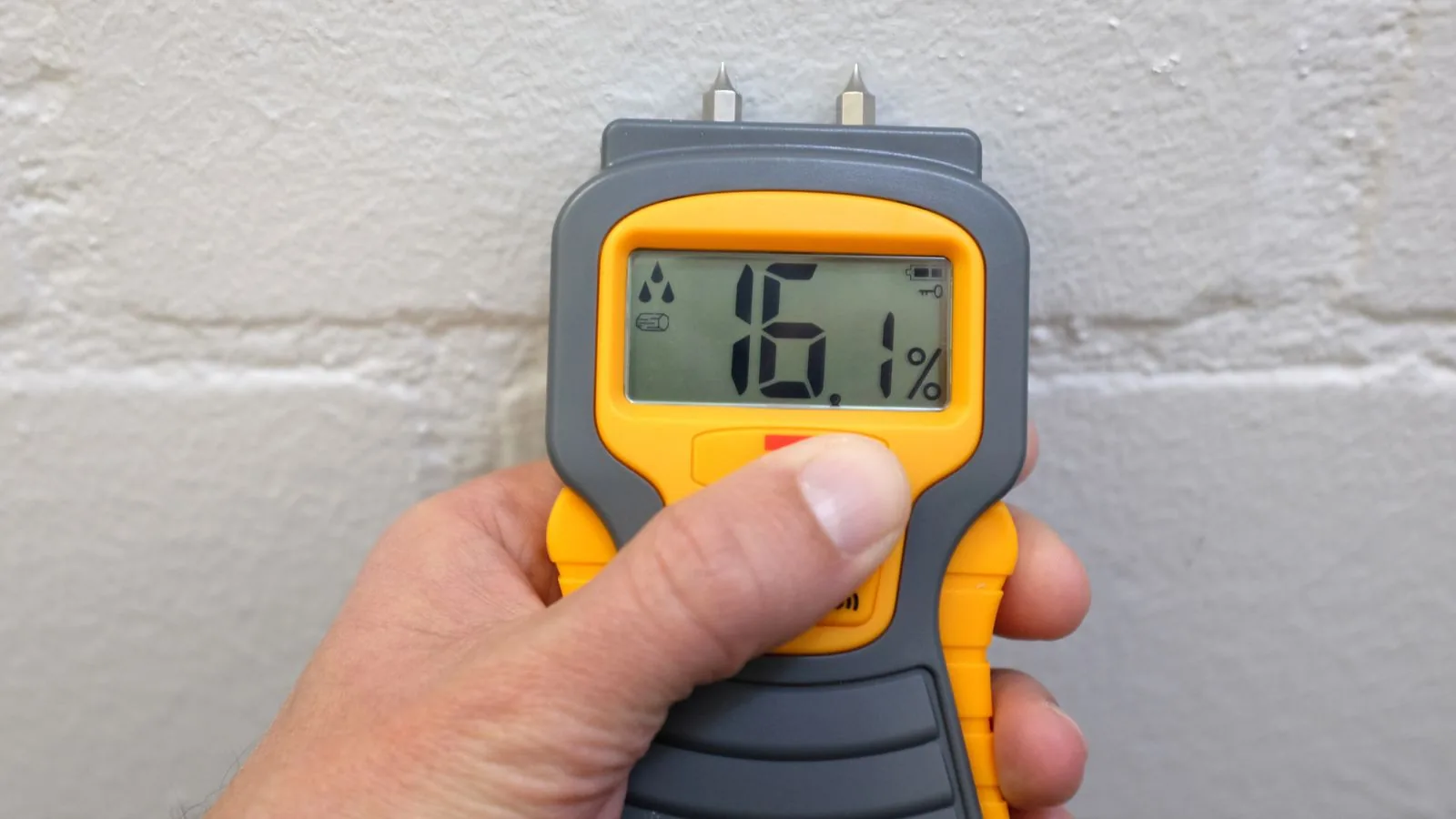
These are general ranges. A moisture meter and readings from an unaffected area give the real target. Drying is finished when materials reach normal readings, not when they feel dry to the hand.
How professionals decide when it is done
- Moisture readings are taken in every affected material and recorded on day one.
- Dehumidifiers and air movers are placed to match the room size and wet area.
- Readings are taken again each visit and compared to a dry reference.
- Equipment is adjusted or moved if a spot is not improving.
- Equipment is removed only when readings reach the dry standard.
This is why a sound-looking room can still be wet underneath. For how this works see structural drying and dehumidification, and for removing standing water first see water extraction.
What you can do while drying runs
- Keep doors and windows closed so the dehumidifier works on a sealed space.
- Do not turn equipment off to save power, and do not move it.
- Remove items from wet areas and hold off on permanent repairs.
- Keep a log of dates, photos and receipts for your insurer.
- Report any new smell, stain or soft spot at once.
Why homes dry slower than people expect
Wet materials do not give up their water evenly. Surface water leaves first, then moisture deeper in the material works its way out slowly. A wet wall can feel dry to the touch while the paper and framing inside still carry moisture, and a floor can look fine while the layers under it are still wet.
Drying equipment works by controlling the air. Dehumidifiers pull moisture out of the air, and air movers push dry air across wet surfaces so more moisture evaporates into it. The aim is a steady, controlled drop in readings, not the fastest possible drying, which can warp wood floors and crack plaster.
What a drying log looks like
- A starting reading for each wet material and for a dry reference area.
- The date, time and equipment count at each visit.
- A new reading after each day of drying.
- Notes on any area that is not improving and what changed.
- A final set of readings that match the dry reference.
If a company cannot show you readings, you have no way to tell whether the structure is dry. Ask for the log and keep it with your claim papers.
Signs drying is not working
- Readings stay flat for two days in a row.
- A musty smell appears or gets stronger.
- Baseboards or trim begin to swell or lift.
- Condensation forms on windows in the drying area.
- Equipment is shut off before final readings are taken.
Any of these is a reason to call the crew and ask for a recheck. Adjusting equipment early is far cheaper than redoing a repair later.
Source-checked local notes
The 24 to 48 hour window comes from EPA guidance on mold and moisture. Moore County humidity can run high for much of the year, which is one reason drying takes active equipment rather than open windows alone.
If you are in nearby towns, see our pages for Pinehurst and Aberdeen.
Frequently asked questions
How long does water damage take to dry?
It depends on the materials and conditions. Surface drying often takes days, while structural drying can take a week or more. Readings decide when it is done.
What is the 24 to 48 hour rule?
The EPA advises drying wet materials within 24 to 48 hours to prevent mold growth.
Can I dry a house with open windows and fans?
Sometimes for a very small wet area, but humid air limits it. Dehumidifiers and monitored airflow dry more reliably.
How do I know the wall is dry?
A moisture meter compared to a dry reference. Touch alone is unreliable.
Why is my floor still wet after days of fans?
Subfloors and layered materials hold water longer. Readings show where it remains.